

Honestly I never gave clocks a second thought. Not once. Then I needed one for my own place and ended up three hours deep into scrolling the same plastic circle in five different colors. Nothing stood out. Then I stumbled on the wooden ones by accident and just… stopped. There’s a difference you can actually feel with real wood grain — you can’t sticker your way into that look, and somehow that one detail makes a clock stop feeling like a gadget you bought and start feeling like something that belongs in the room.
Anyway. If you’re stuck in that same scroll right now, here’s basically the notes I took while comparing a bunch of these. Style, room, how you’d actually use the thing day to day.
1. Rustic Wall Clock

Farmhouse kitchens, basically, or any room that already has exposed brick or old beams doing their thing. The knots in the wood are actually visible on this one, which sounds like a small detail but it isn’t. Rough texture, sometimes a distressed finish, and yeah it looks older than it is — that’s kind of the point, people want that. Entryways and kitchens work. A polished modern living room? Not really, it fights the room instead of fitting into it.
2. Modern Minimalist Clock

If clutter stresses you out even a little, this is your one. Plain face. Thin hands. Nothing fighting for attention. Everyone assumes it’s a Scandinavian-room-only thing, but I’ve seen it sitting fine in offices, and weirdly, bedrooms too — places where you wouldn’t expect a “design object” clock to make sense but it just kind of blends in until you need it.
3. Handcrafted Grandfather Clock
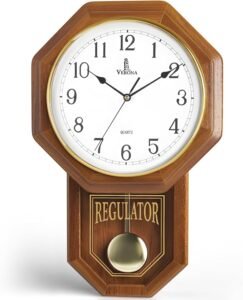
Okay, this one’s a real commitment, not gonna pretend otherwise. Big, tall, impossible to ignore, and it is simply not going into a studio apartment — don’t even try, I’ve seen someone try. But a house with high ceilings and a more traditional layout? Nothing else even competes at that point. Half the reason people buy these anyway is that they get passed down. My grandmother had one in her hallway when I was a kid, and honestly the chime is doing half the emotional work here, not just the looks.
4. Engraved Wooden Desk Clock

Small, practical, and low-key one of the better gift options if you’re out of ideas. Add a name or a date and suddenly it’s not “just a clock” anymore, it’s something people actually keep on a shelf for years. Fits on a desk without eating up space, which matters more than people think when your desk is already a mess.
5. Scandinavian-Style Wall Clock

This is minimalist’s warmer cousin, basically. Natural wood tone, sometimes a subtle shape cut into it — a mountain line, a tree, something quiet, never loud. It gives a plain room just enough character without turning into the main event. Rooms that already lean neutral or beige benefit the most from this, fills a gap that was there without you noticing.
6. Vintage Wooden Mantel Clock
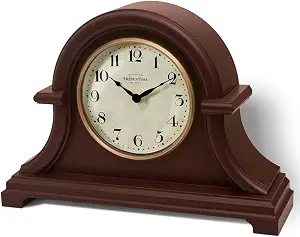
There’s a nostalgia in these that’s genuinely hard to put into words without sounding cheesy. They just sit right on a mantel or shelf, even in an otherwise modern house. Small, sure, but it still leaves an impression somehow — I think it’s the combination of the ticking hands and carved edges, reads expensive even when it wasn’t.
7. Silent Mechanism Wooden Clock

If you’ve tried sleeping two feet from a ticking clock, you already get why this exists. No tick, no background noise, nothing pulling at your attention. Bedrooms, offices, wherever quiet actually matters. One tip — check the listing actually says “silent sweep” or “non-ticking,” because a surprising number of sellers just don’t mention it and you find out the hard way at 11pm.
8. Artistic Wooden Clock

Some of these you’d barely clock as a clock (sorry) at first glance. Hand-carved, odd angles, more sculpture than timepiece honestly. Works well in creative studios, or anywhere you actually want a wall piece people stop and ask about. Good conversation starter if you’re into that sort of thing.
9. Compact Wooden Alarm Clock

Bedside tables are never big enough, so anything compact that still looks decent is already winning. A few models throw in a soft night light, worth hunting for if you’re a light sleeper like me — genuinely makes a difference at 3am when you just need to check the time without turning on a lamp. The humidity/temp display is a nice bonus feature too, more useful than I expected going in.
10. Customizable Wooden Clock

This is the sentimental pick. Engraved names, custom shapes, dates that matter, whatever you want stamped onto it. Best use case is weddings, anniversaries, retirements — basically anything where a gift card feels a little lazy. Most sellers will do custom text for a small fee, message them first before ordering if you need something specific done.
Matching a Clock to the Room
Rustic and vintage pieces go in the busier, warmer parts of a home — living rooms, kitchens, entryways. Minimalist or Scandinavian styles fit bedrooms or anywhere leaning modern better.
For an office it really depends what you’re going for. Want zero distraction? Silent mechanism, easy choice. Want something a little personal? Engraved desk clock. Creative space where you want people to notice the wall? Artistic piece. Just don’t go too ornate in a shared office, it reads as trying too hard fast.
Things Worth Thinking About Before You Buy
Room size first, honestly. A grandfather clock or big rustic piece needs an open room to actually work — cram it into a small space and it just looks wrong, no way around it. Smaller rooms do better with a mantel or desk clock instead, adds charm without becoming clutter.
Match what’s already there. Farmhouse spaces want texture, earthy tones. Modern rooms want clean lines, neutral colors. Traditional homes suit carved detail, creative spaces can get away with something bolder.
Think about actual use. Need quiet? Silent mechanism, no debate. Want it to mean something? Engraved or customizable turns a basic object into a keepsake instead of just another wall filler.
Don’t cheap out on the wood. Teak, oak, mahogany hold up for years, not months. I learned this one the hard way with a bargain pine clock near a window — warped within about four months, total waste of money in hindsight.
Check battery life too, it’s easy to forget. Some models drain fast, especially ones with extras like night lights or displays. Reviews usually flag this if it’s a real problem, worth a quick scroll before you buy.
Why Even Bother With Wood?
Because it ages well — looks-wise and lifespan-wise both. It’s the more eco-friendly option next to plastic or metal too, for what that’s worth. And with this many styles floating around, odds are decent you’ll find one that actually fits your space instead of just something to fill a blank wall. Plastic clocks start looking tired after a year or two. Wood just settles in instead.
One Last Thing
A wooden clock isn’t a huge purchase in the grand scheme of things, but it changes a room more than you’d expect walking through the door. Rustic and weathered, sleek and minimal, or somewhere in the middle — worth the extra ten minutes to pick one that fits your actual space rather than whatever’s trending this week. Worst case you get a decent clock. Best case it’s the thing people ask about the second they walk in.