
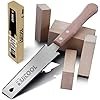

RUITOOL Japanese Ryoba Pull Saw – Why I Switched from My Old Push Saw
I’ll be honest, for years I just used whatever regular hand saw was in the garage because that’s what I grew up using. Then a friend at a woodworking meetup handed me his Japanese Ryoba pull saw and told me to just try it on a scrap piece of pine, no pressure. That was it, honestly. I was already sold before I even finished the cut. It works completely backwards from what I was used to — you cut on the pull, not the push. Sounds like a small thing but it isn’t. Because the blade’s under tension when you pull it, it can be way thinner than normal, so you’re not fighting it, and the cut comes out cleaner than I expected. I stopped noticing it wander off the line halfway through, which used to happen to me constantly with my old saw.
What You’re Actually Getting
Two teeth types on one blade — one side is fine for cutting across the grain, the other side has bigger teeth for ripping along it. Kind of handy, saves you swapping saws mid-project. The pull-stroke design keeps the blade under tension so it doesn’t bow on you. Makes straight cuts a lot easier once you get used to it.
Surprisingly bendy blade too — you can flatten it right against a surface, which I use all the time for flush-cutting dowels and pegs without gouging up the wood around them. The teeth are SK5 steel, impulse-hardened, and they’ve stayed sharp longer than I expected. Still on the same blade after a handful of projects. Handle’s beech wood, comfortable enough for the longer stretches, and it works fine whether you’re using one hand or two on the tougher cuts.
Who Should Get a Japanese Ryoba Pull Saw
If you’re into fine joinery, cabinet work, home renovation, or you’re just a weekend DIYer who wants cleaner results without much effort, this one earns its spot in the toolbox.
I’ve used mine for dovetails, mortise work, flush-cutting dowels, trimming baseboards, worth throwing in there I’ve even cut through PVC pipe with it in a pinch. If you’re doing detailed joinery work, it’s worth pairing this pull saw with a decent chisel set too — I keep a basic set nearby for exactly that.
A Few Things I’ve Learned Using It
Don’t force it. This was my biggest mistake early on, I kept pushing hard on the return stroke out of old habit. Let the pull stroke do the actual cutting and just let the saw glide back loose on the way forward.
Start low and slow. Guide the blade with your thumb (well clear of the teeth, obviously) and begin at a shallow angle so you get a clean groove going instead of a ragged one.
Wipe it down after you’re done. Sawdust and resin build up on the teeth fast, especially if you’re working on anything resinous. A dry cloth and a light coat of oil now and then keeps rust away, more important if you’re somewhere humid.
Frequently Asked Questions About the Japanese Ryoba Pull Saw
What’s the real difference between a push saw and a pull saw?
Push saws need a thicker, stiffer blade or it’ll buckle when you push it forward. Pull saws work backwards — you’re pulling toward yourself, which tensions the blade, so it can be way thinner. Less effort, cleaner cut, that’s basically the whole appeal in one line.
Can this Ryoba saw handle hardwoods like oak or walnut?
Yeah, no problem there. The SK5 teeth get through hardwoods and softwoods fine, and plywood doesn’t tear up the way it sometimes does with a regular saw.
Is it safe to use for flush cuts?
Pretty much yes. It doesn’t have a rigid spine like a Dozuki, so the blade flexes flat against the wood, and you can trim a proud dowel or peg down without marking up the surface around it.