
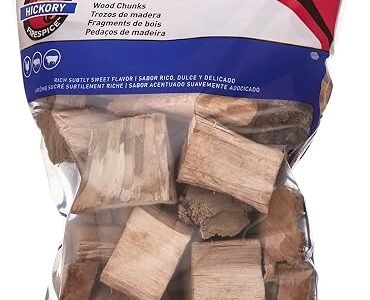

Honestly, most people blame their smoker or their rub when a brisket turns out bland. Nine times out of ten, it’s the wood. I’ve gone through a few different brands of chunks over the years, and Weber’s 17148 Hickory keeps ending up back in my cart — mostly because it’s consistent, and consistent is hard to find in a bag of wood.
So here’s an honest rundown of what’s actually in the bag, how I use it, and where it falls short.
What’s Actually in the Bag
350 cubic inches, roughly 4 lbs, all hickory. No bark chunks mixed in, no weird fillers — I’ve checked. The pieces run bigger than what you’d get in a bag of chips, which matters more than people think. Bigger chunks mean a slower, steadier burn, so you’re not constantly opening the lid to toss more wood on.
A few things worth knowing before you buy:
- It’s 100% hickory, nothing artificial added in.
- The flavor leans bold and a little sweet — this isn’t a “subtle” wood by any stretch.
- Because the chunks are chunky (for lack of a better word), they last longer per session than chips do.
- Works with basically anything: charcoal grills, gas grills with a smoker box, offset smokers, Kamados.
- One bag lasts a few sessions if you’re not overloading the smoker every time.
What to Smoke With It
Hickory isn’t a “delicate fish” kind of wood. It’s built for meat that can take a punch of smoke and still taste good — brisket, pork shoulder for pulled pork, ribs, wild game, whole chickens or turkeys. If you’re smoking something lighter, like fish or vegetables, this probably isn’t your wood. Save it for the heavy stuff.
First time using hickory? You’ll probably overdo it. Almost everyone does. Two or three chunks is plenty for a session — you can always add more next time once you know how strong you like it.
How I Actually Use These
Soak them first. Twenty to thirty minutes in water is enough — any less and they’ll just catch fire instead of smoldering, and a flare-up defeats the whole point.
If your grill runs on gas, you’ll need a smoker box, or just wrap the soaked chunks in heavy-duty foil and poke a handful of holes in the top before setting it over a burner. Works fine either way.
One thing I do that a lot of guides don’t mention — mix in a milder wood like apple or cherry if you’re doing a long cook. Straight hickory for six-plus hours can get a little bitter toward the end. Half and half keeps it balanced.
Store the bag somewhere dry. Sounds obvious, but a damp garage will ruin wood chunks faster than you’d expect, and moldy wood is not something you want anywhere near your food.
Questions People Actually Ask
Can these go on a gas grill?
Yep. Smoker box is the cleanest option, but a foil packet with holes poked in it works almost as well if you don’t own one.
Chunks vs. chips — what’s the real difference?
Burn time, mostly. Chips go up fast and burn out just as fast, so they’re better for a quick 20-30 minute smoke. Chunks are the long game — brisket, ribs, anything that’s going to sit for hours.
Do they work in offset smokers or Kamado grills?
Yes, no issues there. I’ve run them in both and they perform the same as they would in a regular kettle.
Is It Worth Buying?
For the price, yes. It’s not a fancy boutique brand and it doesn’t need to be — it does exactly what hickory chunks are supposed to do. If you’re new to smoking, go easy at first, soak before every cook, and keep a milder wood on hand for balance. That’s really the whole trick.