
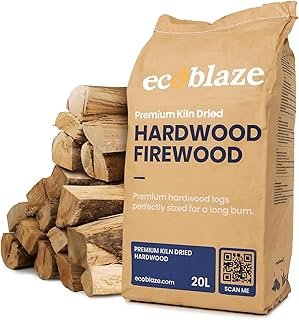

Last winter our wood burner just wasn’t cooperating. I’d load it up, get a flame going, and ten minutes later it’d be sulking again, more smoke than heat, and the glass front turning black way faster than it should’ve. Turned out the logs I’d been buying from the petrol station down the road were nowhere near as dry as they claimed. Learned that the hard way after actually checking with a moisture meter a neighbour lent me.
So I went looking for something properly kiln dried instead of just labelled that way, and Ecoblaze kept popping up. Figured I’d give it a real test before writing anything off or recommending it to anyone.
What you’re actually getting
These are hardwood logs, kiln dried down under 20% moisture, which is the number that actually matters here, not just the words “dried” on the bag. Anything above that and you’re basically burning water along with your wood, which is exactly what was happening to me before.
They’re Ready to Burn accredited too, which is a UK scheme that exists specifically because so many firewood sellers were getting away with selling damp logs labelled as dry. It’s not just marketing fluff, it’s an actual standard the wood has to meet.
Ecoblaze sell these in a few different sizes, nets, bags, boxes, depending on how much you’re after, and they’re aimed at more than just fireplaces. Wood burners, stoves, fire pits, chimineas, pizza ovens, campfires, the lot.
How it actually burns
First thing I noticed opening the bag was that the logs felt light. Properly light, not the damp heaviness you get from wood that’s been sitting outside under a tarp all year. That’s usually a decent sign before you’ve even lit anything.
Getting the fire going took barely any effort. A small flame from a firelighter and it caught within a couple of minutes, no fighting with it, no repeated relighting. Once it was going the flame was strong and consistent rather than that weak flickering thing you get with wetter wood.
Ash was minimal too. I’ve used logs before that leave you with a proper mess to clean out the next morning, and these weren’t like that at all. Barely anything left once it burned through.
The other thing, and this matters more than people realise, was how little smoke it produced. Less smoke means less creosote building up in your flue, which is genuinely one of the more overlooked fire hazards with damp wood. Cleaner burn, cleaner chimney, less to worry about long term.
Heat output and how long it lasted
This is where it really made a difference compared to what I’d been using. The heat came on faster and stayed steadier rather than that up-and-down thing damp wood does where it flares then dies down repeatedly. Room warmed up quicker and stayed warm longer off the same amount of wood, roughly.
I ran a fire pit session outside one evening just to test it properly and it held a decent flame for a couple of hours before needing more logs added, which lines up with what other people seem to say about it too.
Where it works, and where it’s just overkill
Realistically this is good for anything that needs a proper, reliable fire. Wood burners and stoves indoors, fire pits and chimineas outside, pizza ovens if that’s your thing, campfires too. It’s not a specialist product for one specific appliance, it just does the basic job of burning cleanly and efficiently, wherever you’re using it.
If you’re only lighting the odd campfire once a year, you probably don’t need to be this fussy about moisture content and you can get away with cheaper logs. But if you’re running a wood burner through an entire winter, the dryness genuinely earns its keep, both in performance and in what it saves your flue from dealing with.
A few practical things I picked up
Store it somewhere dry once you get it. Kiln dried wood can reabsorb moisture from the air if it’s sitting in a damp shed or exposed to rain, so the effort put into drying it doesn’t count for much if you undo it yourself with bad storage.
Don’t overload the burner thinking drier wood needs more of it. If anything you’ll need less than you think, since it’s burning more efficiently rather than wasting energy evaporating moisture first.
Check the size of logs against your burner or fire pit before ordering a big batch. Reviews mention some variation in log size, so if you’ve got a smaller stove it’s worth checking that before committing to a large quantity.
Good and bad, honestly
What worked well: genuinely dry wood that lights easily, burns clean, low ash, decent heat, and it held a fire outside for a couple of hours without constant topping up.
What didn’t work as well: it’s pricier than the bargain logs you’ll find elsewhere, and log size isn’t perfectly consistent bag to bag based on what other buyers have noted, though that’s fairly normal for firewood in general.
Final word
Would I buy it again? Yeah, honestly. After dealing with a winter of underperforming, smoky fires from wood that was never as dry as it claimed, the difference with properly kiln dried logs was obvious pretty much from the first burn. It costs a bit more than the cheap stuff, but you’re not fighting your fire every evening, and your flue isn’t quietly filling up with creosote while you’re not looking.
If you’re tired of fires that take forever to get going and never really warm the room properly, this is worth trying before you write off wood burning altogether.