
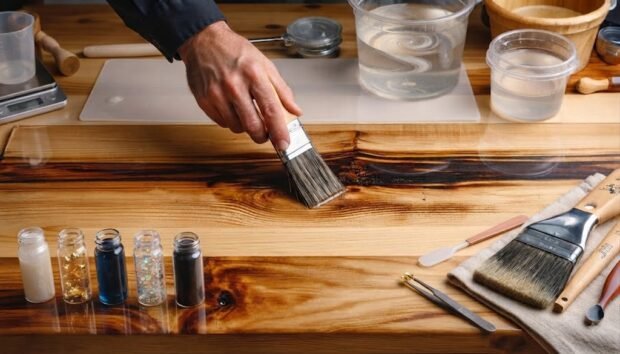

wood finishes process furniture workshop
So a friend of mine spent an entire bank holiday weekend restoring an old oak table she picked up at a car boot sale. Sanded it back beautifully — genuinely lovely work — then just grabbed whatever tin of finish was sitting in the shed. Two weeks later it had gone blotchy and sticky in patches. Wrong finish, wrong wood, wrong everything really.
Most of us treat wood finishes as an afterthought. Grab something on the way to the till at B&Q, don’t think about it twice. But that one choice ends up deciding how long the piece lasts, how it looks in five years, whether it survives rain and spills and a toddler with a biscuit going for a run across the surface.
So here’s what actually matters, and how you dodge the mistake my friend made.
In this guide:
- Why the Right Wood Finish Actually Matters
- Oil-Based Wood Finishes
- Varnish Wood Finishes
- Wax Wood Finishes
- Lacquer Wood Finishes
- Water-Based Wood Finishes
- Stain vs Wood Finishes: What’s the Difference?
- Choosing a Wood Finish for UK Weather
- How to Apply Wood Finishes Without Ruining Them
- Frequently Asked Questions About Wood Finishes
- Final Thoughts on Picking a Wood Finish
Why the Right Wood Finish Actually Matters
Bare wood doesn’t last outdoors. Not for long, anyway. Indoors it’s not much better either, if I’m honest.
Moisture gets in. Stains sink deep. The surface dries out unevenly over time and none of that happens nicely.
A finish, basically, works as a barrier. Seals things up, controls how much water gets through — and a lot of them throw UV protection in too, though not every single one bothers.
Here’s where people get confused though. Some finishes sit right on top of the wood, like a shell over the surface. Others go the opposite way completely, sinking into the grain and basically becoming part of the wood. That one difference changes how the whole piece looks and feels, more than people realise.
Get it wrong and you land exactly where my friend did — a finish that never properly cured, moisture trapped underneath the whole time, weeks of sanding wasted for nothing.
oil-based wood finishes furniture
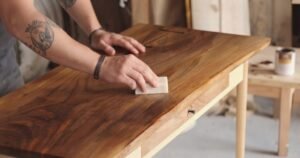
Danish oil, teak oil, tung oil — all of them soak straight into the wood rather than sitting on top like a coating. That’s really the whole point of oil. The wood still feels like wood afterward, not like it’s wrapped in cling film.
There’s a cost to that though. Oil wears down faster than varnish or lacquer would, especially somewhere getting hammered daily, a dining table say, or a worktop. Reapplying every six months to a year is pretty normal.
What wins people over anyway is how forgiving it is to apply. Wipe it on, let it soak, wipe off what’s left. No brush marks to stress about — which matters a lot if you’ve genuinely never finished furniture before in your life.
Best used where you actually want the grain showing, and you don’t mind trading a bit of extra work for that look.
varnish wood finishes glossy table

Say “varnish” to most people in a UK hardware shop and polyurethane’s what they picture. Comes in gloss, satin, matte — take your pick — and once fully cured it hardens into a genuine protective shell right on top of the wood.
Tougher than oil, not much of a contest honestly. A varnished tabletop shrugs off knocks and spills for ages before it needs attention.
Takes patience to get there though. Several thin coats, light sanding between each, and enough waiting around for full cure — sometimes a few days depending on how humid it is wherever you live.
Kitchen tables. Stair banisters. Outdoor furniture that isn’t teak or ipe and could use a hand. That’s where varnish earns its keep.
wax wood finishes furniture polish
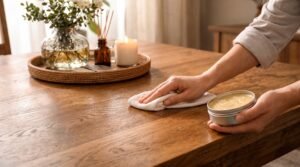
Furniture makers have used wax for centuries, and honestly there’s a reason it never went away. Leaves this soft, warm sheen behind that a lot of people prefer over the shinier look varnish gives.
Doesn’t get much simpler to apply, either. Rub it in, let it sit a moment, buff off with a cloth. No tools needed anywhere in that process.
Durability’s the problem though. Put a hot mug down on a waxed surface and you’ll see a mark almost instantly — it barely does anything against heat or water. Needs reapplying constantly too, sometimes every few months if the piece actually gets used.
Save it for decorative pieces that aren’t taking real daily wear. Or use it as a final polish over something sturdier underneath — that works too.
lacquer wood finishes kitchen cabinet

Workshops love lacquer for one reason really: it dries fast, and on a production line that’s everything. What you’re left with is a hard, almost glass-like surface, tougher against scratches than most other options.
There’s a catch if you’re doing this at home though. Getting it smooth usually means spraying rather than brushing, and that’s exactly where most DIYers get stuck. Brush marks with lacquer are genuinely hard to hide once they’ve set.
So where’s it actually useful? Kitchen cabinets mostly. Or furniture with fine detail where a thick coat of varnish would just look clumsy and heavy.
water-based wood finishes application
Not that long ago, water-based finishes had a fairly bad reputation going around — plasticky-looking, wore out fast, the kind of thing serious furniture makers avoided on principle. That’s changed a fair bit over the last decade.
Newer formulas hold up surprisingly close to their oil-based rivals now, which tends to surprise people who haven’t shopped for finish in a while.
What hasn’t changed is the appeal underneath it all: barely any smell, dries fast. Matters if you’re working indoors without much airflow, or in a flat where a solvent-heavy varnish just isn’t going to work for a weekend job.
Still not quite as tough as a good polyurethane varnish, to be fair. But for most household furniture you’d struggle to actually spot the difference day to day.
Stain vs Wood Finishes: What’s the Difference?
People mix these up constantly, so let’s just be clear about it. Stain changes the colour of the wood. A finish is what protects it. Not the same thing, not interchangeable, whatever the tin might suggest.
Most projects end up using both anyway. Stain goes down first for colour, then a finish — varnish or oil — goes over the top to seal whatever’s underneath.
Skip that second part and it happens more than you’d think: colour fades out, wood ends up just as exposed to moisture and wear as if nobody had touched it at all.
Choosing a Wood Finish for UK Weather
Ask anyone who’s kept garden furniture looking half decent through a British winter — this climate isn’t kind to outdoor wood. Constant damp, the odd sharp frost, long grey stretches without much sun.
Anything rated for indoor use only tends to give up within a single season out there. What actually survives is exterior-grade varnish or marine-grade oil, both built to handle that relentless damp.
Indoors, the concern eases off a bit but it doesn’t disappear entirely. UK homes run humid through winter because central heating’s fighting the damp air outside all season, so moisture resistance still matters even on furniture that never sees actual rain.
Working on something for a conservatory, or a bathroom? Treat it more like an outdoor project than an indoor one. Rooms like that swing in humidity closer to what a garden deck deals with than your bedroom dresser ever will.
How to Apply Wood Finishes Without Ruining Them
Skipping the sanding stage is probably the shortcut people regret most. Nothing sits evenly without it first, no matter how good the product claims to be on the label. Work up through the grits — 220’s usually about right for most furniture.
Dust catches people out more than they’d expect. Run a tack cloth over the surface after sanding, otherwise that fine dust gets trapped under the finish and turns into a rough, gritty texture once it’s dried.
Don’t slap on one heavy coat just to get it done, tempting as that is. Thick layers cure unevenly, trap bubbles, take forever to actually harden. Two or three thin coats will nearly always look better and last longer.
There’s also curing time itself — which manufacturers seem to test under conditions no actual British home has ever experienced. A cold, damp shed in the middle of winter is going to slow that down a lot compared to whatever lab setup the instructions were written for.
According to guidance from the Timber Research and Development Association (TRADA), how much moisture’s already sitting in the wood before you start finishing has a big effect on how well any coating sticks and lasts. Giving a piece time to acclimatise to room conditions first really is worth the wait.
Planning something bigger outdoors alongside this project? Our guide on the best wood for decking and outdoor furniture is worth a look too — the species you go with changes which finish will actually perform well on it.
Frequently Asked Questions About Wood Finishes
Which wood finish lasts the longest? Nine times out of ten, varnish or lacquer. Beat oil and wax on raw durability, particularly anywhere seeing daily use — though oil and wax are genuinely easier to touch up than stripping a whole piece back to bare wood.
Can I apply a new finish over an old one? Depends on the combination, really. Oil over varnish usually fails, the oil just can’t get through that sealed surface. Varnish over a fully cured oil finish though — that can work, provided the old coat’s been properly cleaned and lightly sanded first.
Do wood finishes protect against woodworm? Not in any real way, no. Most finishes are about looks and moisture, not pest control. Woodworm needs its own separate treatment before any finish goes anywhere near the wood.
How long should I wait before using furniture after finishing it? Longer than most people assume, honestly. Touch-dry isn’t cured. Give it at least a week, sometimes more, before it’s actually hardened enough for regular use without marking.
Is one wood finish better for beginners? Most people would say oil. No brush technique to worry about, and mistakes wipe away easily before they’ve had time to set into anything permanent.
Final Thoughts on Picking a Wood Finish
Anyone telling you there’s one correct wood finish for every job is probably selling something. Really it comes down to how much wear the piece takes, whether it lives indoors or out, and how much upkeep you’re actually prepared to commit to.
My friend eventually stripped that oak table back down and redid it properly — marine varnish this time, matched to how much use it actually gets. Held up fine ever since. No blotches, no stickiness, nothing.
She hadn’t really picked a bad finish that first time, not exactly. She just never stopped to ask what the wood, or the job, actually needed before opening the tin. That’s the question worth asking before anything else.