
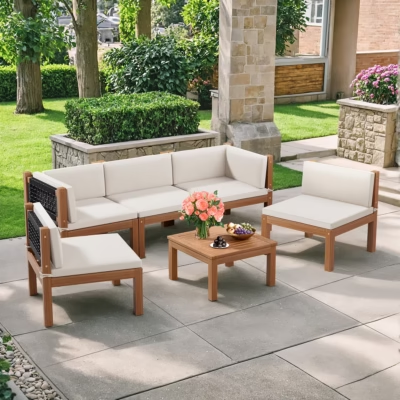

A neighbor of mine spent close to four grand on a “premium” deck a few summers back. By the second winter half the boards had cupped so badly you could trip over them. Turned out the contractor used a cheap pine and never mentioned it needed sealing every year. She had no idea. Most people don’t, honestly, because nobody tells you the wood matters as much as the design does.
Here’s the thing nobody puts on the brochure. Outdoor wood isn’t one category. It’s a dozen different materials with wildly different lifespans, and picking blind is how you end up redoing a deck twice in a decade instead of once in thirty years.
I’m going to walk through what I’ve actually seen hold up, and what hasn’t, when it comes to the best wood for decking and outdoor furniture. A lot of the “buying guides” online just repeat the same six facts about teak without ever mentioning what it’s like to drill into ipe at 2pm on a hot Saturday. Not fun, for the record.
Why Outdoor Wood Has a Rougher Life Than You’d Think
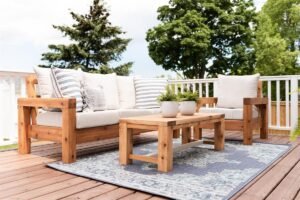
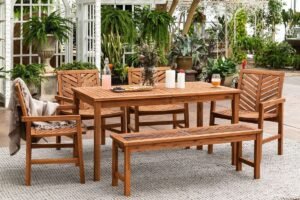
Wood inside your house basically just sits there. Wood outside is under attack constantly.
Take moisture first. It doesn’t sit on the surface, it soaks in. The wood swells up, dries out, shrinks back down.
That happens over and over across a season, and eventually you get cracking or boards that cup and won’t sit flat anymore. It’s less “the wood wearing out” and more like fatigue from expanding and contracting so many times.
Sun does damage on its own timeline. There’s a compound called lignin holding wood fibers together, and UV slowly breaks it apart. That’s the actual reason untreated wood eventually turns that silvery-gray you’ve probably seen on old barns. Some people like the weathered look honestly. I’ve had clients who reseal every spring just to avoid it ever happening, and others who let it happen on purpose because chasing that color is more work than it’s worth to them.
Rot and bugs tend to show up as a package deal. Damp wood attracts fungus. Fungus-softened wood is exactly what termites go looking for. Softer species without much built-in defense get hit first, every time.
Some woods handle all this on their own through natural oils or tight grain. Others only survive because of chemical treatment and whoever remembers to reseal them on schedule. Which bucket a wood falls into tells you roughly how much babysitting it’s going to need down the line.
Teak: A Premium Pick for Outdoor Living
Ever wonder why a nice outdoor dining set costs as much as a used car? Teak’s usually the answer. It’s loaded with natural oils. Those oils push water away and keep bugs from bothering with it, no chemicals required. Leave it alone and it eventually turns a soft silvery gray. A surprising number of people end up liking that more than the original honey-brown.
It’s expensive. No way around that one. Sourcing matters too, so it’s worth checking where it was actually harvested, since not every supplier does that responsibly.
Best use case is furniture, not full decking. Try covering an entire patio in teak and watch your budget disappear fast.
Ipe: The Toughest Decking Option
This wood is basically a tank. It’s dense enough that it barely floats in water, and that density is exactly why rot and insects don’t get very far with it. City boardwalks that take a beating from thousands of feet a day get built out of this constantly, because it simply refuses to quit.
Here’s the catch though, and it’s a real one. Cutting it requires carbide blades. Every hole needs pre-drilling or the screw just snaps off. It’s heavy, expensive, and a rough choice for a first hardwood project. Give it thirty or forty years and it’s usually still standing while everything else nearby has been torn out and replaced twice over.
Cedar: The Classic Deck Wood
Cedar is what most people picture the second you say “wood deck.” Western red cedar carries natural oils and tannins that push back against decay and bugs. Unlike ipe, it’s actually pleasant to work with, you can cut and shape it without a fight.
It’s softer though. Dents and scratches show up more than they would on a hardwood. Skip resealing for a season or two and the color fades noticeably. Still, for the price, it lands in a solid middle ground between plain pine and something like teak.
Redwood: Cedar’s West Coast Cousin
People compare redwood to cedar constantly because it solves a lot of the same problems. Where it pulls ahead is dimensional stability, meaning less warping when the weather swings hard.
The catch is regional. Cheap and easy to find if you’re on the West Coast. Ship it anywhere else and the cost climbs fast enough that cedar starts making more financial sense. Treat the maintenance the same as cedar too, seal it yearly or it starts looking tired quick.
Pressure-Treated Pine: The Budget Option
This is the budget pick, plain and simple. Regular pine has no natural defense against rot or bugs on its own. Forcing preservative chemicals deep into the fibers under pressure is what gives it any real durability outdoors at all.
It’s cheap. It’s everywhere. It’s structurally solid, which is exactly why it ends up in the parts of a deck nobody actually sees, like the joists and framing underneath. The tradeoff is upkeep. Skip resealing for a couple years and it starts looking rough fast. It’s also a poor choice for a tabletop, given how much chemical treatment is involved.
Composite: Not Real Timber, But Worth a Mention
A lot of people comparing decking materials end up here instead of real lumber. It’s plastic and wood fiber pressed together. It doesn’t rot. It doesn’t splinter. It never needs staining.
There are real downsides too though. The upfront cost runs higher than pine. It can get uncomfortably hot underfoot in direct summer sun. It doesn’t age or develop character the way real wood does, and some people genuinely miss that. Still, if the whole goal is avoiding maintenance altogether, it’s hard to argue against.
Figuring Out What Fits Your Situation
Honestly this comes down to cash now versus work later, and being realistic with yourself matters more than any spec sheet ever will.
If money’s tight, pressure-treated pine is the practical call, but only if you’ll actually commit to sealing it every year, because the wood alone won’t save you if that upkeep never happens.
If you’d rather build something once and stop thinking about it, look at ipe. The upfront cost stings, sure, but it tends to outlast two or three cheaper decks built and torn out over that same stretch of time.
Furnishing a patio rather than pouring a whole deck? Teak earns its price tag there since it actually improves with age instead of wearing down. If you’re weighing teak against other premium species for furniture specifically rather than decking, our best wood for outdoor furniture guide goes deeper into that comparison.
For people who want something in between, not too expensive, not too much upkeep, cedar or redwood usually end up being the answer, mostly depending on which coast is closer. Composite sits in its own lane entirely, really meant for people who’ve decided maintenance itself is the thing they want gone, wood look or not.
How Climate Changes the Decision
Rainy, humid places put constant stress on wood through that swell-and-shrink cycle. Naturally resistant species like cedar, redwood, teak, or ipe make more sense there than treated pine does. Dry climates flip that risk around. Less rot to worry about, but more sun damage and drying, so oiling regularly moves up the priority list instead.
Coastal air brings its own headaches. Salt eats through metal fasteners faster than most people expect. It also dries wood out quicker than inland air does. Building anywhere near the coast, stainless hardware paired with ipe or teak tends to go the distance. The Forest Products Laboratory publishes independent research on wood durability and weathering if you want the technical detail behind why species react so differently to climate.
Keeping Outdoor Wood Alive Longer
Wash it twice a year with mild soap and water. Sounds too basic to matter but it genuinely helps, it clears out dirt and mildew spores before they get a foothold. Sealing is the part everyone puts off, and that’s usually the actual mistake. By the time wood visibly looks dry or gray, the damage underneath has usually already started.
Cedar and pine want resealing about once a year. Hardwoods like ipe or teak can stretch to every two or three years without much trouble. Keep it off direct ground contact too, moisture wicks up from soil more aggressively than people assume, so decent footings genuinely pay for themselves over time.
One more thing worth doing before resealing anything, sand it lightly first. That strips off the weathered top layer so the new coat actually soaks in instead of sitting there doing nothing. If you’re maintaining furniture rather than decking specifically, our wood care products guide covers what’s actually worth buying for that job.
Where This Leaves You
None of these woods is objectively “the best.” Your budget, your patience for upkeep, and honestly your climate change the answer more than anything else does.
My neighbor’s deck turned out fine in the end, for what it’s worth. She resealed it, swapped out the worst of the boards, and it’s held up fine since. The wood was never really the problem. Nobody had just told her what she was buying in the first place. If you’re still deciding between solid wood and a manufactured alternative for a bigger outdoor build, our solid wood vs engineered wood comparison is worth a read before you commit either way.