
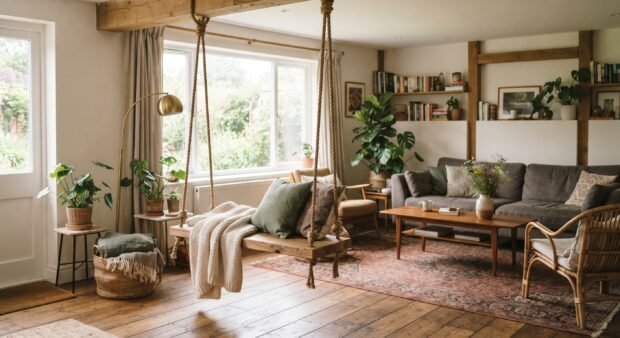

Wooden swings have a way of turning an ordinary corner into the one spot everyone in the house fights over. My grandmother had one on her verandah, old Sheesham wood, chain a bit rusted near the top hook, and honestly nobody in the family could walk past it without sitting for a bit. That’s what a swing does to a house. It’s not really about the furniture. It’s about that one spot where you end up spending way more time than you planned.
A lot of people are bringing wooden swings back now, not just in old houses, apartments too, balconies, even small living rooms. So if you’re thinking of getting one, here’s a rundown of the types that are actually worth looking at.
Traditional Handcrafted Sheesham Wooden Swing
This is basically the classic among wooden swings. Hand carved, usually with some pretty detailed patterns, and Sheesham wood has this grain that just looks different piece to piece, no two are exactly same. Brass chain fittings show up a lot on these, gives it that slightly royal look without the royal price tag.
Needs space though. Don’t put this in a small room, it’ll look cramped and honestly it deserves better than that.
Minimalist Indoor Wooden Swing
Not everyone’s into carvings and brass detailing and all that stuff. Some people just want something clean. Smooth edges, simple seat, lighter build overall.
Add a couple pastel cushions and boom, instant reading corner. It looks basic but it’s not weak, holds up fine for daily use.
Balcony Friendly Compact Swing
For apartment folks mainly. You don’t need a massive balcony, these are built small on purpose so they fit in the kind of space most of us actually have.
Morning coffee on one of these is genuinely nice. So is sitting there in the evening if your balcony gets any kind of breeze at all.
Rustic Outdoor Garden Swing
Got a garden or a terrace or even just a decent veranda? This ones for you. Usually made from teak or Sheesham, both can take sun and rain without falling apart after a season or two, which matters a lot honestly because outdoor furniture that can’t survive outdoor conditions is kind of pointless. If you’re weighing up which species actually holds up outside long term, our best wood for outdoor furniture guide covers that in more depth.
It’s not meant to look polished. The rougher finish is the point, it’s supposed to feel like it belongs outside, not like you just dragged your living room couch into the garden.
Rope and Wood Fusion Swing
This one’s trendy, not gonna pretend otherwise. Wood seat but rope suspension instead of the usual chains, gives a boho kind of look, very “seen this on Pinterest” vibe. Younger buyers tend to go for this one a lot because it doesn’t scream traditional furniture, it looks more global almost, like something you’d see in a beach town apartment.
Works in bedrooms too actually, not just living rooms or balconies.
Double Seater Outdoor Swing
For when swinging alone isn’t the vibe. Wider obviously, and needs stronger chains, rust resistant ones ideally, because it’s holding more weight and more movement than a single seater would.
Good for gardens and patios basically, anywhere people actually gather. Kids fight over it, guests always end up there during a visit, it’s just one of those pieces.
Premium Designer Wooden Swings
This is where you’re paying for details, the finish quality, wood grade, a design that doesn’t look like the ten other houses you’ve been to. Not cheap. But if you’re thinking long term instead of “I’ll change this in three years,” a well-made wooden swing is worth it.
Why Bother With a Wooden Swing at All
Few honest reasons here, no fluff.
Looks. Nothing changes how a room feels as fast as a wooden swing does, no other single piece does that.
The motion itself, it’s relaxing in a way that’s hard to put into words but you feel it the second you sit down after a rough day.
Fits almost any home. Modern house, traditional house, doesn’t matter, there’s a design that works.
Good wood lasts. Teak and Sheesham specifically, these aren’t going anywhere for years if you take even basic care of them. Our wood care products guide covers what actually helps keep a swing’s finish looking good through daily use and weather exposure.
And wooden swings bring people together honestly, kids fighting over turns, guests gravitating toward it during a get together, it’s a weirdly social piece of furniture for something this simple.
Things to Actually Check Before Buying a Wooden Swing
Measure your space first, don’t just eyeball it. Indoor ones generally need about 5×3 feet minimum to hang and move safely.
Match wood to location. Teak or Sheesham outdoors, and make sure it’s actually weatherproofed and not just labeled that way, there’s a difference. Our wooden furniture buying guide walks through how to spot genuinely solid joinery versus something that only looks sturdy in the showroom.
Think about how many people are gonna use this thing regularly. Single seater’s fine for most homes but if there’s kids or a bigger family, double seater earns its extra cost pretty fast.
Chains and hooks matter more than people think. Sounds like a small detail, it’s really not, a swing is only as safe as what it’s hanging from. The Consumer Product Safety Commission publishes general guidance on safe hanging weight limits and hardware ratings for home swings if you want to double check before installing anything.
Get it installed properly, don’t try doing this yourself unless you actually know what you’re doing with mounting hardware. A badly mounted swing isn’t just inconvenient, it’s actually dangerous.
Frequently Asked Questions About Wooden Swings
Which wood’s best for a wooden swing at home? Teak or Sheesham, pretty much everyone says the same thing. Both strong, both age well, grain gets better looking over time instead of worse.
Can this even fit in a small apartment? Yeah, compact versions exist specifically for that. Balconies, smaller living rooms, not really an issue anymore.
Do outdoor wooden swings survive monsoon and summer heat? The good ones do, as long as they’ve got proper protective coating. Untreated wood outdoors is just asking for problems down the line.
How much space for an indoor wooden swing? Roughly 5×3 feet as a minimum. Anything less starts feeling cramped and honestly a bit unsafe to actually use.
Should I just install it myself? Would recommend against it. Get someone experienced, it’s not worth risking getting it wrong.
At the end of the day it’s not really about wood type or design specs or any of that. It’s about having one corner in the house that just feels good to sit in for no particular reason. Pick whatever fits your space and budget, but don’t skip it thinking it’s just an extra. Some things are necessary furniture. Wooden swings are more of a “you don’t know you need it till you have it” kind of thing.