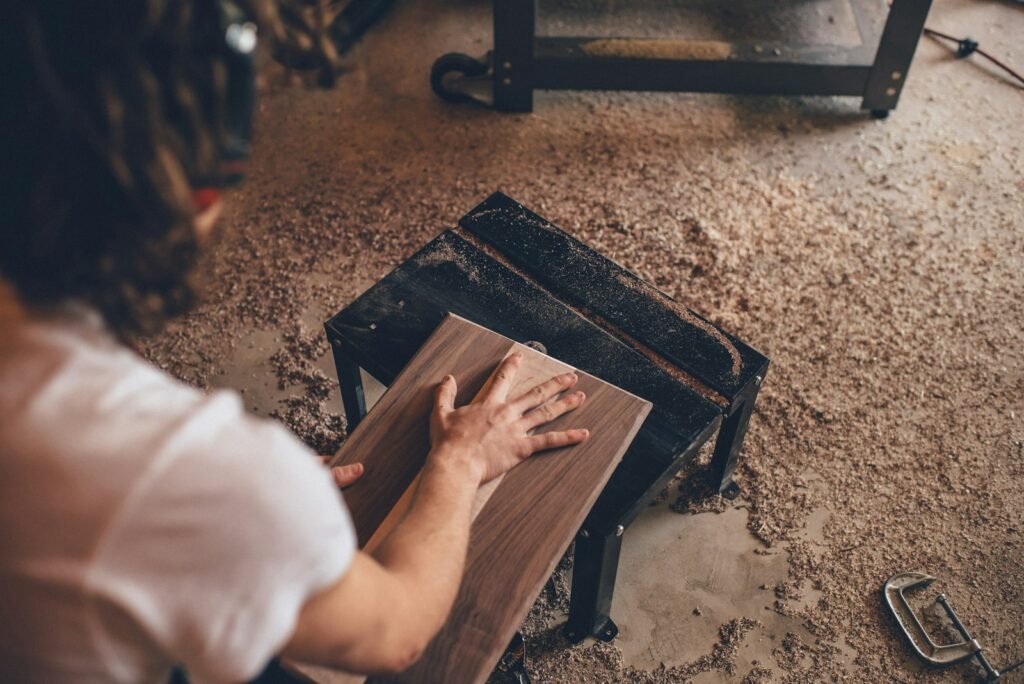
Woodworking is a rewarding hobby, but it involves sharp edges, spinning blades, flying chips, loud machines and fine dust. The right safety gear does not make the work slower or less fun. It lets you keep doing it for decades. This checklist covers the protective equipment every woodworker should consider, why each item matters, and how to choose and use it.
Safety gear is only one layer of protection. Good technique, sharp tools, proper machine guards and a well-organized shop matter just as much. New to the craft? Begin with our Start Here page.
Key takeaways
- Eye protection is non-negotiable whenever you cut, sand, chisel, turn or use power tools.
- Hearing protection should be worn with routers, planers, table saws and other loud machines.
- Fine wood dust can harm your lungs; use a properly fitted respirator plus dust collection.
- Avoid loose clothing, gloves near spinning blades or bits, and dangling jewelry or hair.
- Keep a first aid kit and a fire extinguisher in the shop, and know how to use them.
The complete woodworking safety gear checklist
| Item | Protects against | When to use |
|---|---|---|
| Safety glasses or goggles | Flying chips, dust, debris | All cutting, sanding, chiseling, power tool use |
| Face shield (over glasses) | Larger fragments, face impacts | Wood turning, grinding, some routing |
| Hearing protection | Noise-induced hearing loss | Loud power tools and machines |
| Respirator or dust mask | Fine wood dust, finish vapors | Sanding, sawing, finishing |
| Dust collection / air filtration | Airborne and settled dust | Any dust-producing work |
| Push sticks and push blocks | Hands near blades and cutters | Table saw, router table, jointer |
| Work gloves | Splinters, rough lumber, chemicals | Handling stock and finishes, never near spinning blades or bits |
| Sturdy closed-toe shoes | Dropped tools and boards | Always in the shop |
| Appropriate clothing | Entanglement | Always around machines |
| First aid kit | Cuts, splinters, minor injuries | Kept accessible at all times |
| Fire extinguisher | Shop fires | Kept accessible at all times |
1. Eye and face protection
Your eyes are the most vulnerable part of your body in a shop. Chips, knots, splinters and broken bits can fly unexpectedly, even from hand tools.
- Safety glasses: look for glasses marked as meeting ANSI Z87.1 (the US standard for eye protection), with side protection. Regular prescription glasses are not safety glasses unless they are rated.
- Goggles: seal around the eyes, which helps in dusty conditions and for those who wear prescription glasses underneath.
- Face shields: protect the whole face from larger debris, particularly when turning on a lathe or using a grinder. A face shield is worn over safety glasses or goggles, not instead of them.
- Glasses are light and comfortable
- Goggles seal out dust
- Face shields add full-face coverage
- Glasses can fog or leave side gaps
- Goggles can get warm
- Face shields alone are not primary eye protection
2. Hearing protection
Many woodworking machines, such as routers, planers, table saws and shop vacuums, are loud enough that repeated exposure can contribute to permanent hearing damage. Hearing loss usually develops gradually and is not reversible, so protect your ears every time.
- Foam earplugs: inexpensive and effective when inserted correctly (rolled tight and allowed to expand deep in the ear canal).
- Earmuffs: easy to put on and take off between cuts. They can be combined with earplugs for very loud work.
- Noise Reduction Rating (NRR): a higher NRR means more attenuation in lab conditions; real-world protection depends on fit.
- Earplugs are cheap and compact
- Earmuffs are quick to use and reuse
- Earplugs must be inserted properly to work
- Earmuffs can be warm and may conflict with some glasses
3. Respiratory protection and dust control
Fine wood dust is a recognized health hazard. It can irritate the eyes, skin and airways, can cause allergic reactions, and long-term exposure to some wood dust is associated with more serious respiratory illness. Some species are known sensitizers. The finest particles are the most dangerous because they stay airborne and reach deep into the lungs, and they are often invisible.
- Disposable respirators: choose ones approved by NIOSH, such as N95-rated respirators, for dust. A simple “nuisance” dust mask without a NIOSH approval is not equivalent.
- Reusable half-mask respirators: use replaceable particulate filters (P100 filters are common for dust). For finishes and solvents, use cartridges rated for organic vapors as specified on the product label.
- Fit matters: a respirator only works if it seals to your face. Facial hair can prevent a seal. Follow the manufacturer’s fit-check instructions.
- Capture dust at the source: connect tools to a shop vacuum or dust collector, and consider an air filtration unit. Respirators are the last line of defense, not the only one.
- Clean smart: vacuum with a filtered vacuum instead of sweeping or blowing dust with compressed air, which puts fine dust back in the air.
Planning your dust collection? Our workshop setup articles cover shop layout and organization.
4. Hand protection: use gloves carefully
Gloves are useful for handling rough lumber, sheet goods and finishing chemicals. However, do not wear gloves when operating machines with spinning blades, bits or cutters, such as table saws, router tables, drill presses and lathes. A glove can be caught and pull your hand into the tool. Always follow the tool manufacturer’s instructions.
- Leather or work gloves: for moving lumber and rough materials.
- Nitrile gloves: for stains, finishes and glue.
- Cut-resistant gloves: some woodworkers use them for carving with knives, where there is no spinning tool.
5. Push sticks, push blocks and featherboards
These simple accessories keep your hands away from blades and cutters. Use a push stick or push block whenever your hand would come close to a table saw blade, router bit or jointer cutterhead. Featherboards hold stock against the fence and table, which helps control the workpiece. Keep the machine’s guards, riving knife or splitter, and anti-kickback devices installed as designed. For tool-specific guidance see our power tools section.
6. Clothing, footwear and personal habits
- Avoid loose sleeves, ties, scarves, hoodie strings and dangling jewelry around machines.
- Tie back long hair.
- Wear sturdy closed-toe shoes; boards and tools do get dropped.
- An apron can carry small tools, but make sure straps and pockets cannot catch on machinery.
- Never work when tired, rushed, distracted or under the influence of alcohol or medication that affects alertness.
7. First aid and fire safety
- First aid kit: stocked with bandages, gauze, tape, antiseptic, tweezers for splinters and an eye wash. Know where it is and restock it.
- Fire extinguisher: keep one rated for ordinary combustibles, flammable liquids and electrical fires (an ABC-type extinguisher is common for home shops) near the exit.
- Oily rags: rags soaked with some oil finishes (such as linseed oil) can spontaneously combust as they dry. Lay them flat outdoors to dry or store them in a sealed metal container with water, following the finish manufacturer’s directions.
- Phone access: keep a phone within reach in case of serious injury, especially if you work alone.
8. Safe shop practices
- Read and follow the manual for every power tool.
- Unplug tools before changing blades or bits or making adjustments.
- Keep blades and bits sharp; dull tools require more force and increase risk. See how to sharpen chisels and plane blades.
- Secure workpieces with clamps or a vise. Our clamps guide explains the options.
- Keep floors clear of offcuts and cords to prevent trips.
- Provide good lighting so you can see lines and hazards clearly.
- Keep children and pets out of the work area while tools are running.
Safety gear by tool type
Different tools create different hazards. Use this table as a starting point, and always defer to the manual for your specific tool.
| Tool or task | Main hazards | Recommended protection |
|---|---|---|
| Table saw | Kickback, blade contact, noise, dust | Safety glasses, hearing protection, push sticks, blade guard and riving knife, dust collection |
| Miter saw | Blade contact, flying offcuts, noise | Safety glasses, hearing protection, clamps to hold short pieces |
| Router and router table | Bit contact, chips, loud noise, fine dust | Safety glasses or face shield over glasses, hearing protection, respirator, push blocks, featherboards |
| Circular saw and jigsaw | Blade contact, kickback, dust | Safety glasses, hearing protection, clamped workpiece |
| Lathe | Flying chips, workpiece failure, entanglement | Face shield over safety glasses, respirator when sanding, no gloves or loose sleeves |
| Power sanders | Fine dust, noise | Respirator, dust extraction, safety glasses, hearing protection |
| Bench grinder | Sparks, fragments, hot metal | Safety glasses plus face shield, eye shields installed, tool rest set correctly |
| Hand chisels and saws | Cuts, flying chips | Safety glasses, clamped work, hands behind the edge |
| Finishing | Vapors, skin contact, fire | Ventilation, organic vapor respirator as labeled, nitrile gloves, safe rag disposal |
Everyday shop safety habits
Gear protects you when something goes wrong. Habits help stop things going wrong in the first place. These simple routines are worth building from day one.
Pause before every cut
Before switching on a machine, take a second to check: Is the workpiece secure? Where will my hands be at the end of the cut? Where will the offcut go? Is anything in the path of the blade? This quick mental checklist catches many mistakes before they happen.
Stand out of the line of fire
On a table saw, avoid standing directly behind the blade, where kickback would travel. In general, position your body so that a slipping tool or ejected part would not head toward you.
Let the tool stop
Wait for blades and bits to come to a complete stop before reaching near them, clearing offcuts or lifting a guard.
Work at a calm pace
Rushing is a common factor in shop accidents. If you feel frustrated or hurried, take a break. Many experienced woodworkers have a firm rule against starting a risky cut at the end of a long day.
Keep the shop clean and organized
Clutter on tables and floors leads to trips, unstable workpieces and tools knocked off benches. Put tools away after use and clear offcuts regularly.
Use good electrical practices
Use cords rated for the tool, inspect them for damage, and avoid overloading circuits. Use GFCI protection where required, especially in garages and damp areas, and consult a licensed electrician for wiring changes.
Learn before you cut
When trying a new tool or technique, read the manual, watch reputable instruction, and practice on scrap. If a cut feels unsafe, it probably is; find another way to do it.
Building your safety kit on a budget
You do not need to buy everything at once. Start with safety glasses, hearing protection, NIOSH-approved respirators, push sticks and a first aid kit. These are inexpensive and cover the most common risks. Add a face shield, better dust collection and a fire extinguisher as your shop and tool collection grow. Replace items when they wear out: scratched lenses, flattened earmuff seals and loaded filters all reduce protection.
Frequently asked questions
What is the most important piece of woodworking safety gear?
Eye protection, because eye injuries can happen with nearly any task and can be permanent. Hearing and respiratory protection are close behind, since that damage builds up silently over time.
Is a cloth or basic dust mask enough for sanding?
Usually not. For fine wood dust, use a NIOSH-approved respirator such as an N95 or a half-mask with P100 filters, fitted correctly, along with dust collection.
Should I wear gloves when using a table saw?
No. Gloves can be caught by spinning blades and bits. Use push sticks and push blocks instead and follow the saw’s manual.
Do hand tool woodworkers need safety gear too?
Yes. Safety glasses protect against flying chips when chiseling or splitting wood, and a first aid kit is useful for the inevitable small cuts. Respiratory protection matters during sanding and finishing.
To learn how we write and review safety content, see How We Review, and explore our beginner guides for more fundamentals.
