


Okay, so a few years ago I bought a bookshelf. “Solid oak,” the listing said. I was happy with it until I had to move it and flipped it over, and there’s just… plywood. Stapled on. With staples missing in a few spots already.
I remember standing there thinking, well, that explains a lot actually, because the thing had been wobbling slightly for months and I couldn’t figure out why. That one purchase is basically the reason this wooden furniture buying guide exists.
That’s basically why I started paying attention to this stuff, because most of us shop for furniture standing in front of it under nice lighting, and that’s exactly the angle that hides everything wrong with a piece.
This isn’t a “buy this brand” post, brands change constantly and half the good ones get bought out and go downhill anyway. It’s more just, here’s what to actually check before you hand over your card, the parts most wooden furniture buying guides skip over.
Solid Wood, Veneer, or That Pressboard Stuff
People mix these up constantly, so let’s actually break down the three tiers, since this is really the foundation of any decent wooden furniture buying guide, and getting this part wrong is where most buyers go astray.
Solid wood is what it sounds like, real lumber all the way through, or at least the parts that matter structurally. It costs more, obviously. It moves a little with humidity too, swells and shrinks, which some people don’t realize until their drawer sticks in summer and they think something’s broken. The good thing about it though is you can sand it down and refinish it basically forever. Any thorough wooden furniture buying guide should point this out early. If you’re weighing this up more seriously, our solid wood vs engineered wood comparison goes deeper into cost and durability by furniture type.
Veneer gets a bad rap it doesn’t always deserve, honestly. It’s a thin slice of real wood glued onto something cheaper underneath, plywood usually. If it’s done well, with a decent base, it can actually hold up better than cheap solid wood in some cases, because the base doesn’t warp the same way. The issue is bad veneer, so thin a scratch goes right through to whatever’s underneath, and there’s no fixing that.
Then there’s MDF and particleboard, which is fine for some things. A bookshelf holding paperbacks, sure. A dining table six people are going to lean their elbows on for the next fifteen years? Probably not the move.
None of these is automatically “the bad one.” A well-built veneer dresser will outlast a badly built solid wood one, every time, no question.
Flip It Over Before You Buy It, Seriously
I skipped this test for years myself, which is exactly the mistake that led to that plywood bookshelf. It’s honestly the single biggest clue in this whole wooden furniture buying guide to how long a piece will actually hold up.
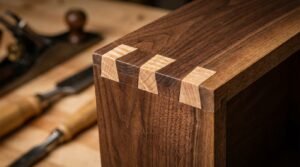
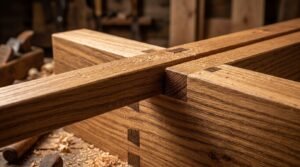
Turn a chair upside down. Look under a table if the store lets you, most do, just ask. You’re checking how it’s actually put together. Mortise and tenon, dovetails, that kind of joinery takes longer to make, which is exactly why cheap furniture skips it and just staples and glues things instead. Visible staples along a seam usually means the piece was built to be replaced, not repaired.
Drawers are a good test too. Pull one all the way out. Smooth, or does it catch and rattle a bit? Dovetailed corners are a good sign. Corners held together with just nails or staples tend to loosen up within a year or two of normal use, and once a drawer joint goes, it’s genuinely annoying to fix properly, which is exactly the kind of thing a wooden furniture buying guide is meant to help you avoid.
The Wood Type Actually Matters, Not Just the Colour


A lot of buying regret comes from picking a colour you like without thinking about what the wood actually does day to day, and no wooden furniture buying guide is complete without covering this part.
Oak is heavy, dense, takes abuse well, that’s why it’s everywhere in dining tables and anything that gets moved or used hard. Walnut has that rich dark look people love for a statement piece, and it holds up decently, it just costs more per board. Pine is soft and cheap and honestly dents if you look at it wrong, fine for a low-traffic bookshelf, not great for a coffee table people are going to rest their feet on constantly, and we all do it, let’s be honest. If you want a fuller rundown of which species suit which room, our types of wood for home decor guide breaks it down further.
Teak is worth mentioning separately if you’re buying anything for outside. It naturally has oils in it that fight off water and rot without needing any sealant, which is exactly why real teak costs what it costs, and why the cheap “teak style” stuff at big box stores almost never is actual teak. This is exactly the kind of detail a wooden furniture buying guide needs to flag before you spend the money. We cover this in more depth in our guide to the best wood for outdoor furniture too.
Smell It. Yes, Really.
Walk up and smell the thing before you buy it, I know that sounds strange but stick with me. A sharp chemical smell, kind of sweet almost, usually means heavy adhesive or finish use that’s still off-gassing. Not always dangerous, but you probably want to know that before it sits in your bedroom for the next six months.
Run a hand along the edges too while you’re at it. Rough sanding underneath, or inside drawers where people cut corners on finishing, tells you something about how much care went into the parts you can’t easily see from the front. This is another spot where a good wooden furniture buying guide earns its keep. Curious what finish is actually on the piece and whether it’s any good? Our wood finishes guide explains what to look for.
Check if it actually sits flat too, on a hard floor rather than carpet, since carpet hides a wobble completely. A wobble in the store is not going to fix itself once it’s in your living room, that’s just wishful thinking, and no wooden furniture buying guide can save you from skipping this check in person.
What’s Worth Paying Extra For (and What Isn’t)
More expensive doesn’t automatically mean better built, but a few things genuinely do track with price if you’re trying to decide where to spend, and this is where most of a wooden furniture buying guide’s advice actually pays for itself. Getting this part of the wooden furniture buying guide right saves real money down the line.
Real hardwood over particleboard is worth it for anything holding daily weight, tables and chairs and dressers you’re opening constantly.
Hand-cut joinery or good precision joints are worth it if you’re keeping the piece for a decade or more rather than replacing it in three years when it wobbles apart. Actual metal drawer slides and hinges instead of plastic ones are worth it too, because plastic hardware is almost always the first thing that snaps.
What’s usually not worth paying extra for is the brand name by itself, especially on simple things like basic bookshelves or side tables, where the actual build quality varies more by which factory made it than by whose logo is stamped on the box.
A Few Buying Habits That Actually Help
Furniture always looks smaller under warehouse lighting than it does back in your actual living room, so measure the space twice before you fall for anything on the showroom floor. Ask specifically what wood species it is instead of accepting “solid wood” as an answer, because that phrase alone tells you nothing, it could be oak, it could be some soft cheap thing nobody bothers naming. And if you’re buying online, scroll past the perfect hero photo and check customer review photos, they show the actual colour and wear far more honestly than a professional listing shot ever will. This is the kind of habit any decent wooden furniture buying guide should push you toward. The Furniture Industry Research Association also publishes independent testing standards if you want to check how a specific piece was rated before buying.
Frequently Asked Questions
Is solid wood always better than veneer? Quality matters more than category here. A poorly assembled solid wood piece can fall apart faster than a well-made veneer one built over a solid core, so what you’re really judging is the construction, not just the material listed on the tag.
How do you actually tell if something’s solid wood in a store? Pick it up, or try to, weight gives it away fairly reliably since solid wood is noticeably heavier than veneer over particleboard. The grain is the other tell, real wood carries the same pattern straight through any cut edge, whereas veneer shows a completely different material the moment you look closely at a corner.
Is MDF furniture even worth buying? Depends entirely on the job. Shelves, decorative pieces, low-stress items, it’s a perfectly reasonable and budget-friendly choice there. Ask it to carry daily weight or heavy use though, and solid wood or well-built veneer is going to outlast it by a wide margin.
Is old antique furniture actually better than new? Often, yes, mainly because a lot of surviving antiques were built with joinery techniques that modern mass production skips entirely to save time. The tradeoff is upkeep, older pieces tend to need more of it, and fitting a specific antique style into a modern room isn’t always a simple match.
How long should solid wood furniture actually last with proper care? Generations, realistically, assuming the joinery was solid to begin with and the piece hasn’t spent years next to a radiator or heating vent. Humidity swings are the other thing to watch for, keep it away from constant extremes and there’s no real reason it shouldn’t outlive the person who bought it.
The Bottom Line
Two minutes of skepticism in the store beats two years of annoyance at home when a drawer won’t close or something starts wobbling on its own. Flip the piece, pull a drawer, give it a smell, push on it to check the wobble. None of that takes long, and it tells you more than a price tag or a brand name ever could. That’s really the whole point of a wooden furniture buying guide, giving you a two-minute checklist instead of a leap of faith. This wooden furniture buying guide won’t make every purchase perfect, but it’ll catch the obvious mistakes. What actually holds up over time usually isn’t the most expensive piece on the floor, it’s just the one somebody bothered to build properly in the first place.